
Introduction
The Cane Corso is a powerful, intelligent, and loyal dog breed known for its impressive appearance, protective instincts, and strong connection with its family. Originally developed in Italy, this large working dog has a history of guarding property, protecting livestock, and assisting with various farm activities. Today, the Cane Corso is admired by experienced dog owners who appreciate its intelligence, confidence, and natural guarding abilities.
However, owning a Cane Corso involves more than simply appreciating its muscular body and intimidating appearance. This breed requires responsible ownership, consistent training, early socialization, regular exercise, and proper healthcare. Its protective nature makes it an excellent companion in the right environment, but it may not be suitable for inexperienced owners.
This comprehensive guide explains everything you need to know about the Cane Corso, including its history, physical characteristics, personality, training requirements, diet, grooming, common health problems, and suitability as a family pet.
What Is a Cane Corso?
The Cane Corso is an Italian working dog belonging to the Molosser family. It is recognized for its muscular build, broad head, powerful jaw, and confident personality. The breed was historically used for guarding homes, protecting farms, hunting large game, and performing agricultural tasks.
The name Cane Corso comes from Italian terminology associated with dogs used for protection and guarding.
Unlike some companion breeds that primarily seek attention and entertainment, the Cane Corso has strong working instincts. It naturally observes its surroundings and often remains alert to unfamiliar people or situations.
A properly bred and trained Cane Corso can become a devoted family companion. Nevertheless, its size, strength, and protective tendencies mean that responsible ownership is essential.
History and Origin of the Cane Corso
The Cane Corso originated in Italy and is believed to descend from ancient Roman Molossian-type dogs. Its ancestors were historically associated with military activities, property protection, and agricultural work.
After the decline of the Roman Empire, these powerful dogs continued serving Italian communities. Farmers and property owners valued them for their ability to protect livestock, guard homes, and assist with hunting.
Over time, changes in agricultural practices and rural lifestyles caused the breed’s population to decline. Dedicated Italian breeders later worked to preserve and restore the Cane Corso.
The breed gained international recognition as its popularity increased outside Italy. Today, the Cane Corso is recognized by major kennel organizations, including the American Kennel Club (AKC).
Its historical working background continues to influence its modern temperament, intelligence, and protective behavior.
Physical Characteristics of a Cane Corso
The Cane Corso is a large, athletic, and muscular dog with a distinctive appearance. Its physical structure reflects its historical role as a working and guarding breed.
Size and Weight
Adult Cane Corsos are generally substantial dogs. Their exact measurements vary according to genetics, sex, nutrition, and overall health.
Typical breed standards include:
- Male height: Approximately 25–27.5 inches.
- Female height: Approximately 23.5–26 inches.
- Male weight: Often around 90–110 pounds.
- Female weight: Often around 80–100 pounds.
These weight ranges are general estimates rather than strict requirements. A healthy Cane Corso should maintain an appropriate body condition instead of being judged solely by its weight.
Coat and Colors
The Cane Corso has a short, dense coat that lies close to its body. Its coat is relatively easy to maintain compared with that of long-haired breeds.
Common recognized coat colors include:
- Black
- Gray
- Light gray
- Fawn
- Red
- Brindle
Some dogs may also have small white markings on the chest, toes, or nose area, depending on breed standards.
Facial Features
One of the most recognizable features of the Cane Corso is its broad, powerful head. It typically has a square-shaped muzzle, expressive eyes, and naturally alert ears.
Its muscular neck, deep chest, and strong legs contribute to its athletic appearance.
Cane Corso Temperament and Personality
Understanding Cane Corso temperament is essential before bringing this breed into your home.
A well-raised Cane Corso is generally confident, affectionate with its family, intelligent, and naturally protective. It often develops a close relationship with its owners and prefers staying involved in family activities.
However, individual personalities vary. Genetics, early experiences, socialization, training, and living conditions all influence behavior.
Are Cane Corsos Aggressive?
A Cane Corso is not automatically aggressive simply because it is a large guarding breed.
Its protective instincts may make it cautious around unfamiliar people. Without appropriate socialization and training, this natural alertness can develop into unwanted behaviors, including excessive suspicion, reactivity, or difficulty managing unfamiliar situations.
Responsible breeders, positive training methods, and controlled exposure to different environments help develop stable behavior.
Owners should never encourage unnecessary aggression or use intimidation-based training techniques.
Are Cane Corsos Good Family Dogs?
Cane Corsos can be loyal and affectionate family companions when properly trained and managed.
They generally benefit from:
- Consistent household rules.
- Supervised interactions with children.
- Early socialization.
- Positive reinforcement training.
- Regular physical and mental activities.
- Responsible management around visitors.
Because of their size and strength, interactions with young children should always be supervised. Even friendly behavior can accidentally cause injuries.
How to Train a Cane Corso
Training is one of the most important responsibilities of owning a Cane Corso.
This breed is intelligent and capable of learning complex commands, but it also requires clear communication and consistent leadership.
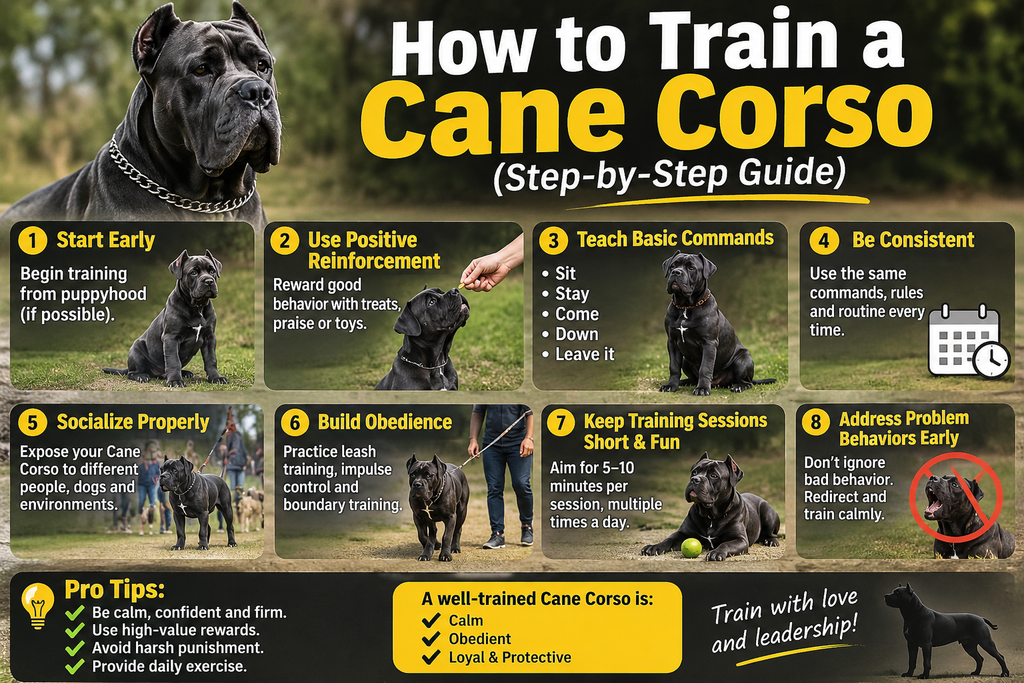
Start Training Early
Puppy training should begin as soon as a Cane Corso joins its new home.
Basic commands include:
- Sit
- Stay
- Come
- Down
- Leave it
- Heel
- Place
Teaching these commands early helps establish communication and encourages good manners.
Use Positive Reinforcement
Positive reinforcement involves rewarding desirable behavior with treats, praise, toys, or other appropriate rewards.
This approach helps build trust and encourages the dog to repeat successful behaviors.
Harsh punishment, physical corrections, and fear-based training can damage the relationship between the owner and dog.
Focus on Socialization
Socialization is particularly important for Cane Corsos because of their natural guarding instincts.
Introduce puppies gradually and positively to different people, environments, sounds, surfaces, and well-mannered dogs.
The objective is not to make the dog friendly with everyone. Instead, it is to develop a calm, confident animal that can respond appropriately to everyday situations.
Owners should also consider working with a qualified professional dog trainer experienced with large guardian breeds.
Exercise Requirements of a Cane Corso
Despite its muscular appearance, the Cane Corso needs structured exercise to maintain physical and mental health.
Most healthy adult dogs benefit from approximately 60–90 minutes of daily activity, although individual requirements depend on age, health, fitness, and veterinary advice.
Suitable activities include:
- Daily walks.
- Controlled outdoor exploration.
- Obedience exercises.
- Scent-based games.
- Interactive toys.
- Appropriate play sessions.
Mental stimulation is just as important as physical activity. Training games, food puzzles, and scent activities help prevent boredom.
Puppies should not be forced into excessive exercise, repetitive jumping, or prolonged high-impact activities because their bones and joints are still developing.
Exercise should also be adjusted during hot weather to reduce the risk of overheating.
Cane Corso Diet and Nutrition
Proper nutrition supports healthy growth, muscle development, energy levels, and long-term wellbeing.
Because the Cane Corso is a large breed, its nutritional requirements should be considered carefully, particularly during puppyhood.
What Should a Cane Corso Eat?
A balanced diet should provide:
- High-quality animal protein.
- Appropriate dietary fats.
- Digestible carbohydrates.
- Essential vitamins and minerals.
- Adequate water.
Choose a complete and balanced dog food formulated for the dog’s life stage and size.
Large-breed puppy food is particularly important during development because controlled growth and appropriate mineral levels support healthy skeletal development.
How Often Should You Feed a Cane Corso?
Feeding frequency depends on age and individual needs.
A general feeding schedule is:
- Young puppies: Three to four meals daily.
- Older puppies: Two to three meals daily.
- Adult dogs: Usually two meals daily.
Portion sizes should be determined according to body condition, food calorie content, activity level, and veterinary recommendations.
Avoid feeding immediately before or after intense exercise. Discuss an appropriate feeding and activity routine with your veterinarian to help reduce digestive risks.
Grooming and Maintenance
The Cane Corso has a short coat, making grooming relatively straightforward.
However, regular maintenance is still necessary to keep the dog comfortable and healthy.
Brushing
Brush the coat approximately once or twice a week to remove loose hair and distribute natural oils.
During seasonal shedding, more frequent brushing may be useful.
Bathing
Bathe your Cane Corso when necessary using a dog-friendly shampoo.
Excessive bathing may remove natural oils and contribute to dry or irritated skin.
Nail Trimming
Trim the nails regularly to prevent overgrowth and discomfort. Long nails can affect walking posture and movement.
Dental Care
Brush your dog’s teeth regularly with dog-specific toothpaste. Dental hygiene helps reduce plaque buildup and supports overall oral health.
Ear Cleaning
Check the ears regularly for dirt, redness, odor, or unusual discharge. Clean them using veterinarian-approved products when needed.
Common Cane Corso Health Problems
Like many large dog breeds, the Cane Corso may be susceptible to certain inherited and age-related health conditions.
Responsible breeding, preventive healthcare, appropriate nutrition, and regular veterinary examinations can help reduce health risks.
1. Hip Dysplasia
Hip dysplasia occurs when the hip joint develops abnormally, potentially causing instability, discomfort, and arthritis.
Possible signs include:
- Difficulty standing.
- Reduced willingness to exercise.
- Stiffness after resting.
- Changes in walking patterns.
Veterinary assessment and appropriate treatment are important.
2. Elbow Dysplasia
Elbow dysplasia refers to developmental abnormalities in the elbow joint.
Affected dogs may experience lameness, stiffness, and discomfort, particularly after physical activity.
3. Gastric Dilatation-Volvulus (Bloat)
Bloat is a potentially life-threatening emergency in which the stomach becomes distended and may twist.
Warning signs include:
- A swollen abdomen.
- Repeated unsuccessful attempts to vomit.
- Excessive drooling.
- Restlessness.
- Weakness or collapse.
Seek emergency veterinary care immediately if these symptoms occur.
4. Eye Conditions
Some Cane Corsos may develop eye problems, including eyelid abnormalities such as entropion and ectropion.
Regular veterinary examinations help identify potential issues early.
5. Heart Conditions
Certain large breeds can develop cardiac conditions. Veterinary examinations and appropriate diagnostic testing can help assess heart health.
How Long Do Cane Corsos Live?
The average Cane Corso lifespan is approximately 9–12 years.
Individual lifespan varies according to genetics, healthcare, nutrition, body condition, and living environment.
Preventive veterinary care and responsible breeding can contribute to a healthier life.
Is a Cane Corso Good for First-Time Owners?
The Cane Corso is generally not the easiest choice for inexperienced dog owners.
Its large size, strength, protective instincts, and training requirements demand considerable commitment.
First-time owners may find it challenging to manage the breed without professional guidance and a well-planned training routine.
An experienced owner who understands canine behavior and can provide appropriate structure is generally better prepared to meet the breed’s needs.
Before purchasing or adopting a Cane Corso, consider your lifestyle, available time, financial resources, housing situation, and experience with large dogs.
How Much Does a Cane Corso Cost?

The price of a Cane Corso varies significantly depending on location, breeder reputation, bloodline, health testing, age, and pedigree documentation.
Dogs from responsible breeders who perform appropriate health screening may cost more than puppies from unverified sources.
However, the initial purchase price is only one part of ownership expenses.
Potential costs include:
- Quality dog food.
- Vaccinations and veterinary examinations.
- Training classes.
- Grooming supplies.
- Leashes and collars.
- Bedding and equipment.
- Emergency veterinary care.
- Pet insurance, where available.
Always prioritize health, temperament, and responsible breeding practices instead of choosing a puppy based exclusively on appearance or price.
How to Choose a Healthy Cane Corso Puppy
Selecting a healthy puppy requires careful research.
Look for breeders who prioritize the physical health and temperament of their dogs.
Before choosing a puppy:
- Ask for relevant health screening documentation for the parents.
- Visit the breeding environment when possible.
- Observe the puppy’s behavior and interaction with littermates.
- Request veterinary and vaccination records.
- Ask about the parents’ temperaments.
- Review the breeder’s socialization practices.
- Avoid sellers who refuse to provide basic health information.
Responsible breeders should be willing to answer questions and explain their breeding practices.
Avoid purchasing puppies from sellers who prioritize extreme physical characteristics over health and functional movement.
Cane Corso vs. Other Large Dog Breeds
People considering a Cane Corso often compare it with other large working and guardian breeds.
The Cane Corso is particularly recognized for its muscular build, close family attachment, and guarding background.
Compared with a Labrador Retriever, it generally has stronger natural guarding instincts and different training requirements.
Compared with a German Shepherd, it has a heavier Molosser-type structure and a different working history.
Compared with a Rottweiler, both breeds share certain guarding characteristics, but their individual temperaments and exercise needs depend on genetics, training, and upbringing.
There is no universally superior breed. The right choice depends on the owner’s experience, lifestyle, expectations, and ability to provide appropriate care.
FAQ About Cane Corso
1. Is a Cane Corso a good family dog?
Yes. A properly socialized and trained Cane Corso can be a loyal family companion. However, supervision around children and responsible management are essential because of its size and strength.
2. Are Cane Corsos naturally protective?
Yes. The breed has a historical background as a property and livestock guardian. It often demonstrates natural alertness and protective behavior toward its family.
3. How big does a Cane Corso get?
Adult males generally stand around 25–27.5 inches tall, while females usually measure approximately 23.5–26 inches. Weight varies depending on sex, genetics, and body condition.
4. How long does a Cane Corso live?
A typical Cane Corso lifespan is approximately 9–12 years, although individual dogs may live longer or shorter lives.
5. Are Cane Corsos easy to train?
They are intelligent and capable learners, but their size, confidence, and guarding instincts make consistent early training and socialization essential.
6. Do Cane Corsos shed?
Yes. Cane Corsos have short coats and shed throughout the year, with potentially increased shedding during seasonal changes.
7. Can a Cane Corso live in an apartment?
A Cane Corso can potentially live in an apartment if its exercise, training, mental stimulation, and space requirements are properly managed. Its large size and exercise needs should be considered before making this decision.
8. Is a Cane Corso suitable for beginners?
Generally, it is better suited to experienced owners who understand large guardian breeds and can provide consistent training, socialization, and responsible management.
9. What is the best food for a Cane Corso?
The best food is a complete and balanced diet appropriate for the dog’s age, size, activity level, and health condition. Large-breed puppy formulas are recommended during growth.
10. Does a Cane Corso need professional training?
Professional training is not mandatory for every dog, but working with a qualified trainer experienced in guardian breeds can be extremely beneficial, especially for inexperienced owners.
Conclusion
The Cane Corso is an impressive Italian working breed that combines intelligence, strength, loyalty, and natural protective instincts. Its history as a guardian and farm dog continues to influence its modern personality and behavior.
However, owning this breed requires more than providing food and shelter. Early socialization, consistent positive reinforcement, regular exercise, balanced nutrition, and preventive veterinary care are essential for its wellbeing.
For experienced and responsible owners, a well-raised Cane Corso can become a devoted companion and an important part of the family.